
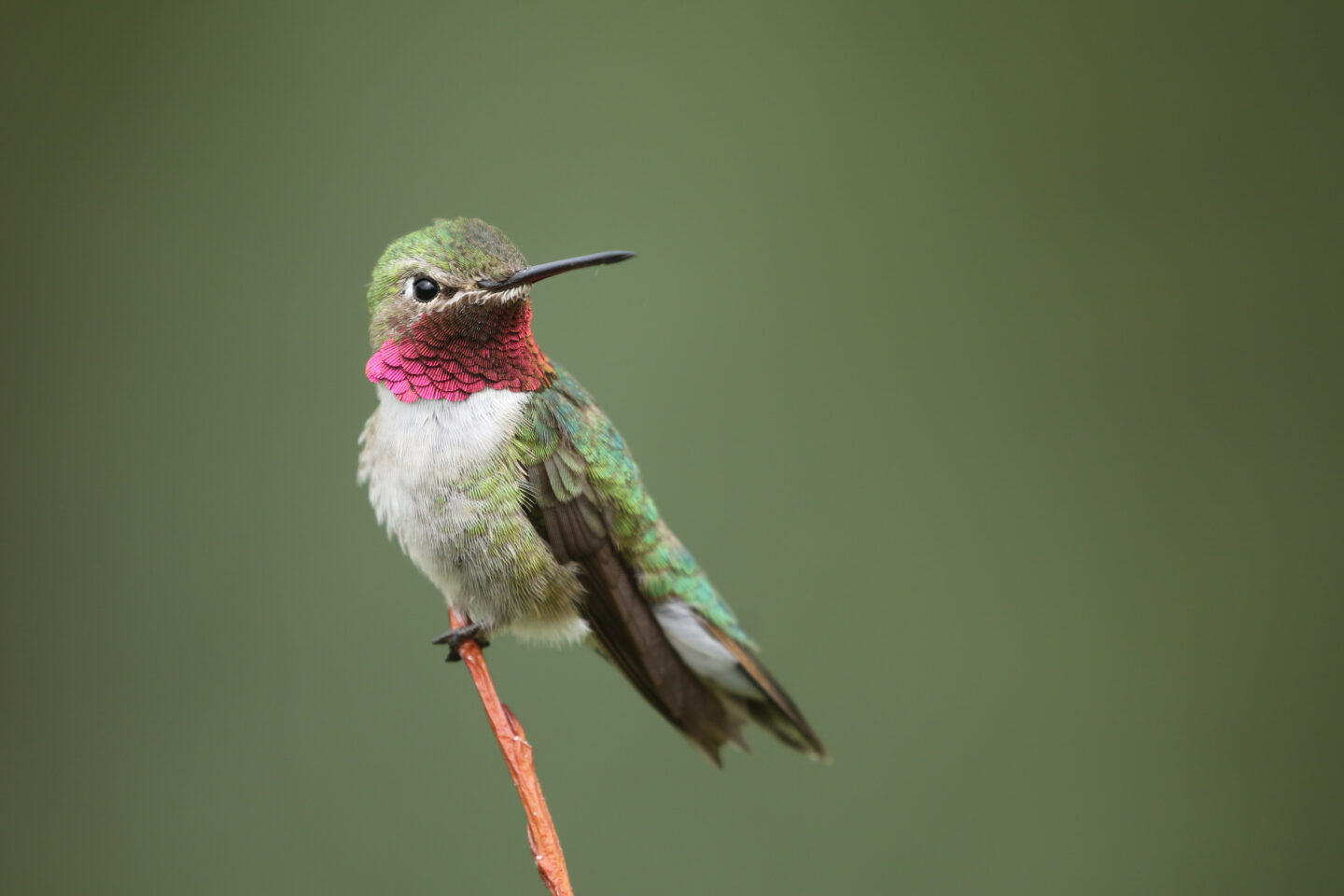
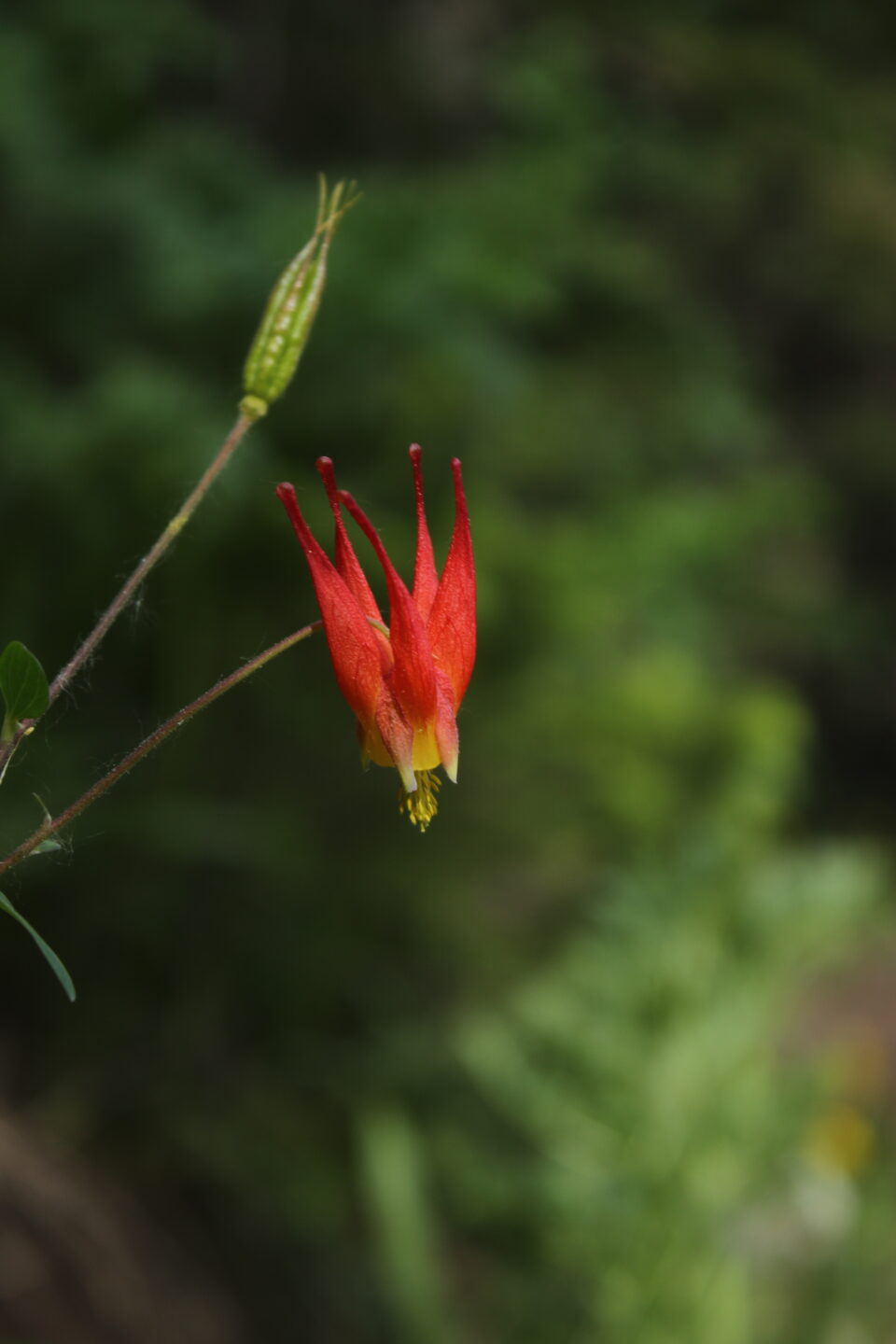
Hi everyone! For my first post, I just thought I would detail what I’m doing for my fellowship! I’m working with Professor Cassie Stoddard from the Ecology and Evolutionary Biology Department, assisting her on research with hummingbirds and their relationship with wildflowers at Rocky Mountain Biological Laboratory in Gothic, Colorado. Gothic has an elevation of about 9,500 feet, and the climate in the mountains is often quite varied. Year-to-year differences in snowmelt lead to variation in when and for how long particular flowers can bloom, which has a large effect on the phenology of the Broad-tailed Hummingbird. The Broad-tail is the most common breeding hummingbird in the Rockies and it migrates from wintering grounds in México to montane and subalpine sites up in the mountains. However, climate change could lead to phenological mismatch between the hummers and the wildflower species they depend on. As earlier snowmelts lead to earlier blooming, hummingbird migration may not shift up at the same rate because it is triggered by different environmental cues on their wintering grounds.
As the summer progresses, a multitude of flower species are blooming while others are wilting, and we want to know several things: which species hummingbirds will visit, which they prefer to visit, when the flowers first emerge, and how long the flowers bloom. All of these can tell us if there is phenological mismatch between the blooming of the flowers and the life history of the hummingbirds due to climate change. So, what I help do is set camera traps on the specific flowers that Broad-tailed Hummingbirds are known to visit. We place time-lapse cameras on flowers that the hummers are known to visit (and also sometimes on flowers that they are not documented to visit but we may observe them at) in an effort to gain comprehensive data on the preferences of the hummingbirds over the summer. Considering that pollinators are important in maintaining biodiversity and ecological stability and montane/subalpine species are some of the most vulnerable to climate change, studying how Broad-tailed Hummingbirds may change their foraging behavior can tell us more about the composition of montane ecosystems under climate change and we can better understand which species need the most immediate conservation efforts.



3 Comments
You’re project sounds really exciting! Love that your working with the environment and looking into conservation, especially in my home state.
This is SO cool! What was your favorite moment of the summer? Also, what conservation practices do you anticipate being implemented?
It’s so interesting that you’re analyzing how climate change affects birds’ foraging behavior and migration patterns. Cool pictures too!